Vashti Johnstone: The Wild Intelligence of Matter
Vashti Johnstone is a woman who won’t be pigeonholed. With a strong sense of self, she is a diva who sets herself apart, uniquely positioned in the world of art, once even experiencing rejection because she didn’t subscribe to an easily identifiable genre. One might describe Johnstone as a New Zealand contemporary landscape-inspired abstract expressionist. However, she is her own entity, an artist driven from a place deep within who articulates through her art, marking a visual language that transcends beyond words. Maybe, just maybe, our need for stylistic analysis is best suspended when experiencing Johnstone’s work and we should listen to her art instead.
Raised on 6,000 acres of high country, the land seeps into Johnstone’s soul, ever present in her art. However, the sweeping free-market economic reforms of the 1980s hit the family hard. Attending boarding school at the time, Johnstone came home to a new house on a lowland farm. Although different, this land would also shape her future, the open spaces a forerunner to the years she would later live on the Canterbury plains. Regardless of location, Johnstone’s late father instilled in her an appreciation for the land as something lived and felt. Long after his passing, traces of this inheritance are embedded in Johnstone’s work, materialising in her response to land, memory and belonging.
Throughout history, women have lacked a voice in the art world. Never absent from art, but often relegated and unheeded, feminist artists have been confronting this imbalance since the 20th century. Giving voice to womenkind through art, Johnstone draws strength and inspiration from other women, none more so than her mother. While her 2023 series, Rapport, explores the relationships between people and place, and the easy rapport within their ordinary lives, hidden in plain sight is Johnstone’s mother. Painted at the conclusion of the Covid years, it would be easy to point to a yearning for a return to pre-Covid simplicity and an escape from the politics and the lockdowns. However, the roots for this series belong in the 1980s when the family lost their high-country farm. Johnstone’s mother rolled up her sleeves and made a new home for her family, hand-stencilling the house, layering it with love and gifting her daughter inspiration that Johnstone would carry into her professional life. The repetition of geometric and stencilled folk-art motifs within much of Johnstone’s art is a tribute to the inner strength of women. Enveloped in her mother’s hug, Johnstone gives voice to the power of women through art, ensuring women are heard, and no longer marginalised.
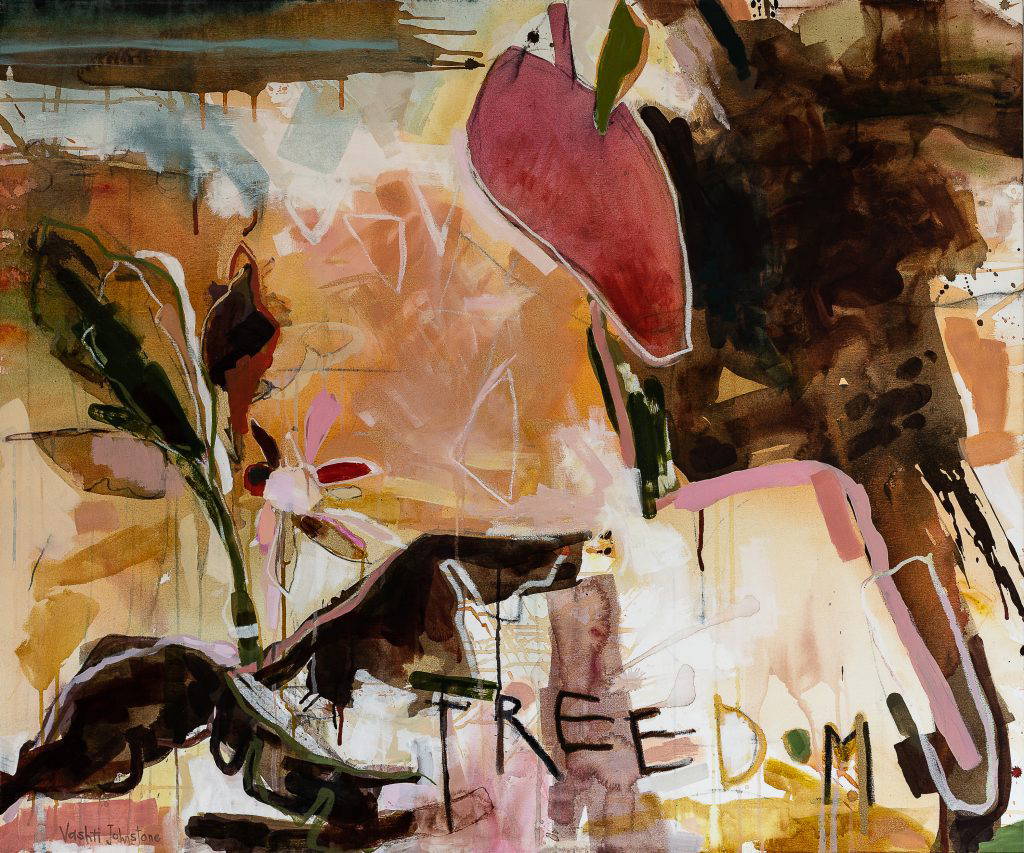
Ironically, Johnstone has come to a realisation that the only person silencing her is herself. However, her 2025 selection for the prestigious Château d’Orquevaux residency in France has provided reassurance. Immersed in a new cultural landscape, Johnstone says the lessons are still landing, but, overwhelmingly, she has learnt to silence her doubts. Driven by a lifelong devotion to visual language, Johnstone paints a colourful dialect, most powerful when control loosens and intuition leads. It’s a freedom she best encompasses when she embodies her new mantra, ‘Everybody can get fucked.’ It’s not directed at individuals. It’s not aimed at the art establishment. Instead, it quiets the voices in her head, the ones questioning logistics, the ones asking will people like this, and the ones focused on administration. As Johnstone explains, ‘Everything falls away. I give myself permission to be myself.’
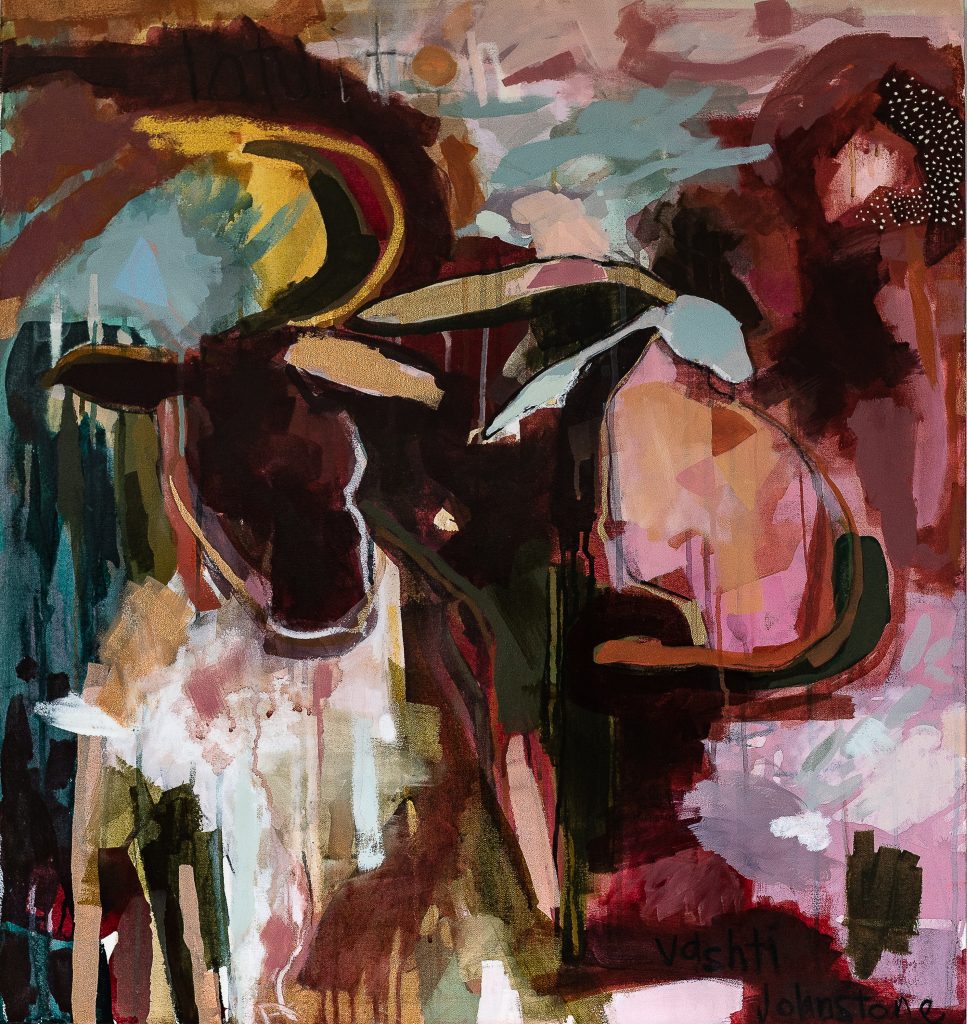
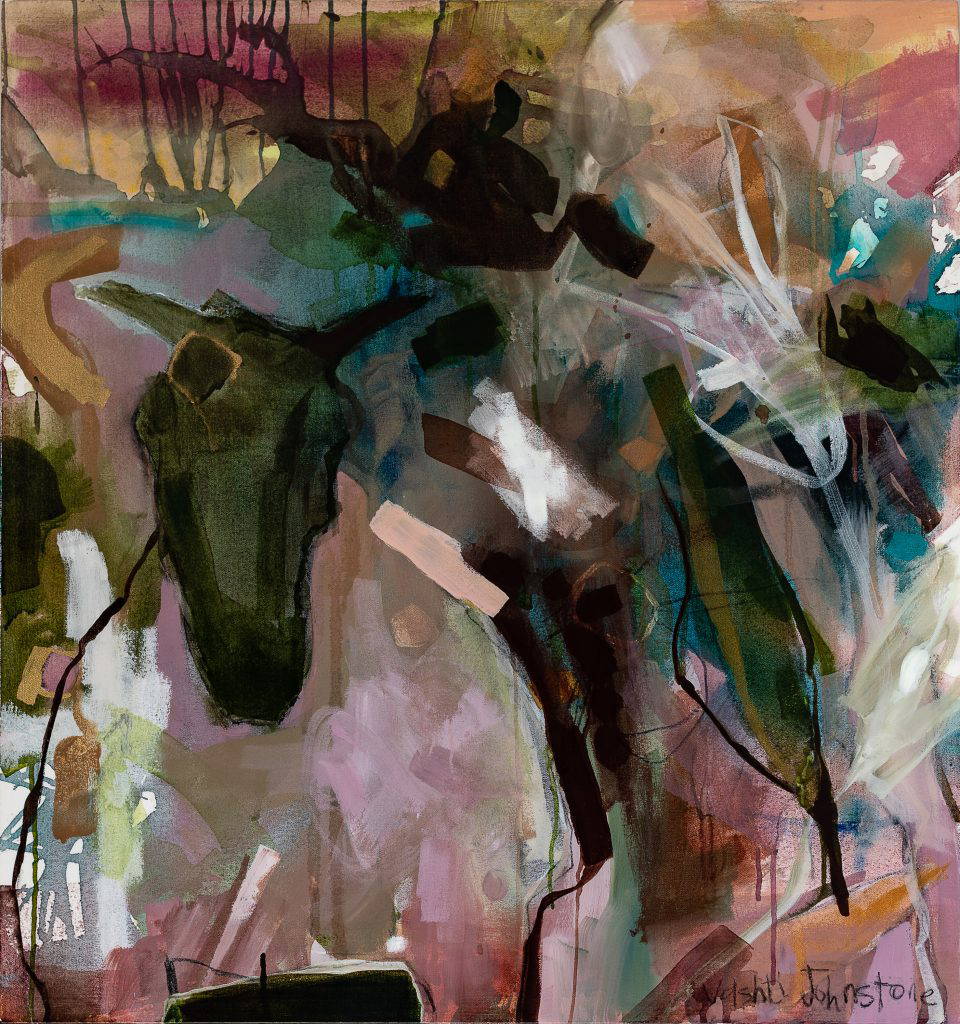
This release is evident in Johnstone’s latest series, Feral Grace. Striking and emotive, the series is a profound statement, drawing on a depth previously absent. Spiritually rich, Feral Grace bears Johnstone’s trademark style. Animated layers of riotous colour absorb the viewer, while Johnstone’s dissolving lettering and charcoal lines are immediately recognisable. Paint bleeds, it pools and it settles, a primal experience, a spiritual veneration of nature, a multi-faceted exploration of an entrenched wildness.
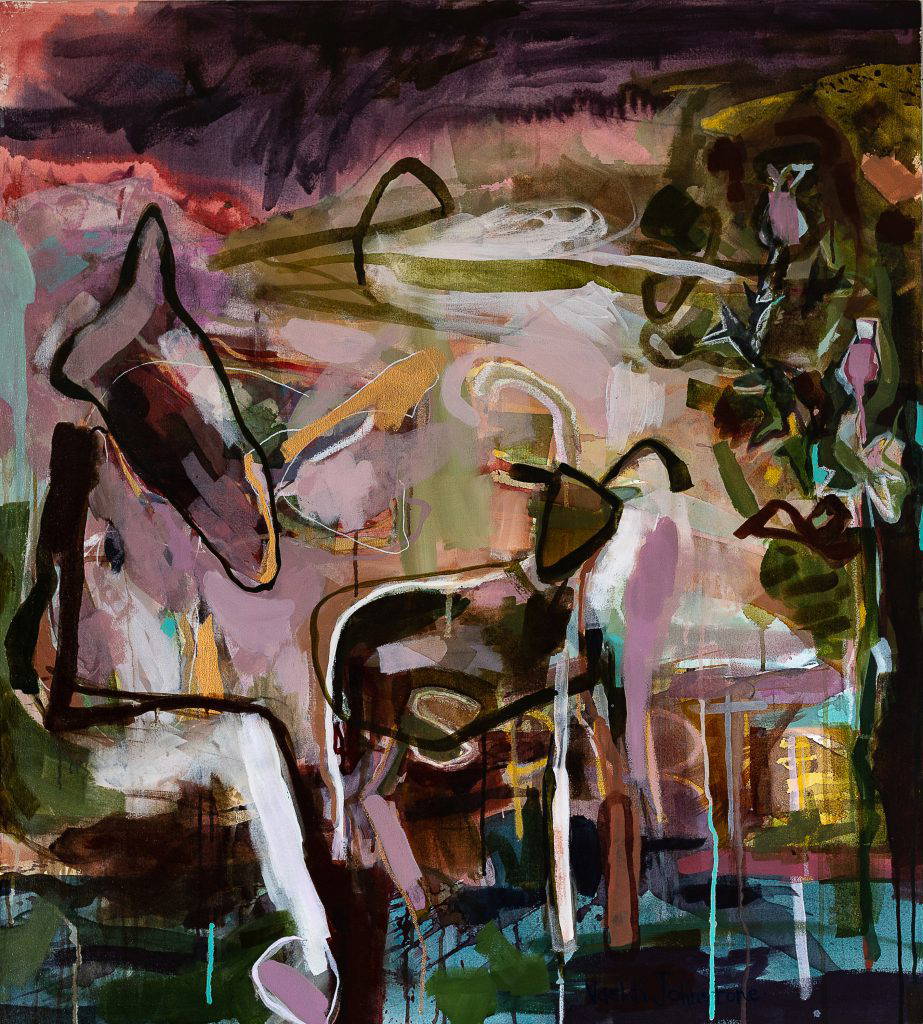
Formally trained, Johnstone knows the rules of composition, but she’s the first to admit she breaks them. And this is when instinct takes over, mark-making shaped by perception and led by intuition. Within Feral Grace, the influence and wild depths of Johnstone’s home, the South Island’s West Coast, plays a leading role. Impossibly old and a remnant of a forgotten age, ferns unfurl beneath towering giants, moss-laden trunks disappear into shadow, and leaves rustle a secret language. Hidden mountain streams thunder over tumbling boulders, swollen by torrential rain. It’s a place where one loses oneself, both literally and metaphorically. However, coupled with innate calmness, Johnstone’s Feral Grace becomes a portal to pause, breathe and reconnect. It’s a place of letting go and becoming.
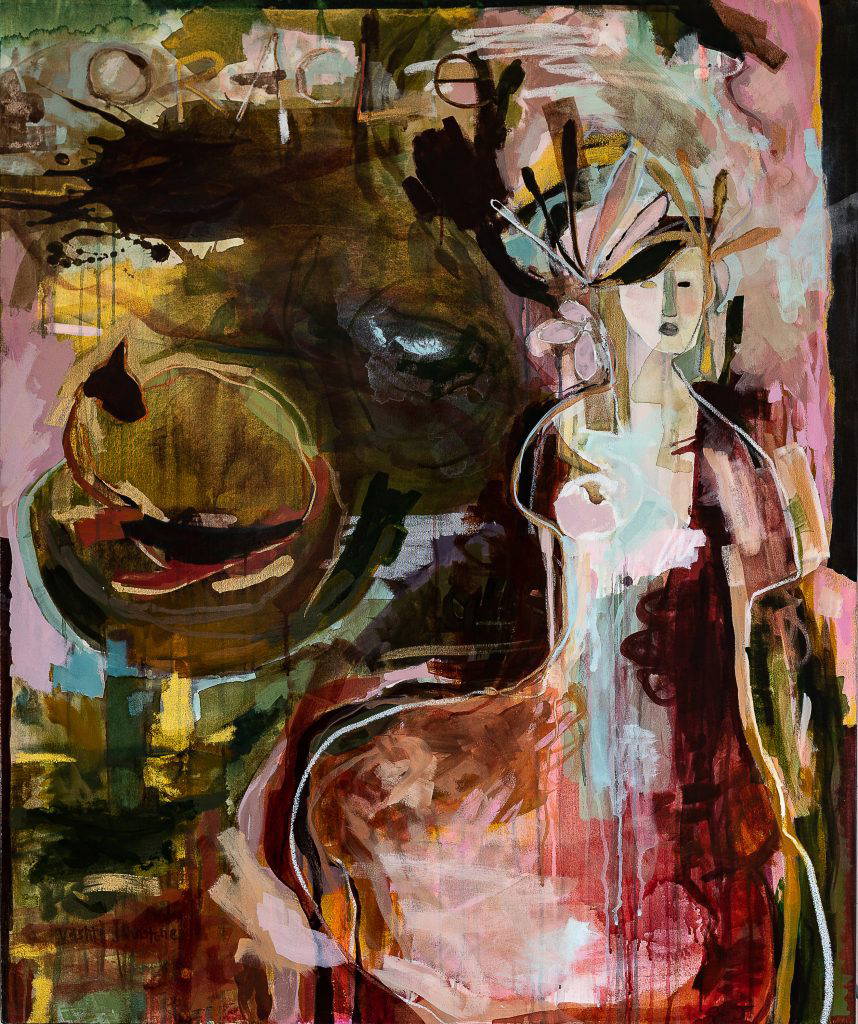
An eclectic spiritualist, Johnstone’s belief system is influenced by nature and intuition, rooted in wonder, connection and lived experience rather than a formal doctrine. ‘I walk this earth,’ she explains, ‘and the history of the ancestors are for all of us. I’m drawn to the wisdoms of tribal culture when the artisans were revered. I’d love us to shape each other and pick each other up for our gifts.’
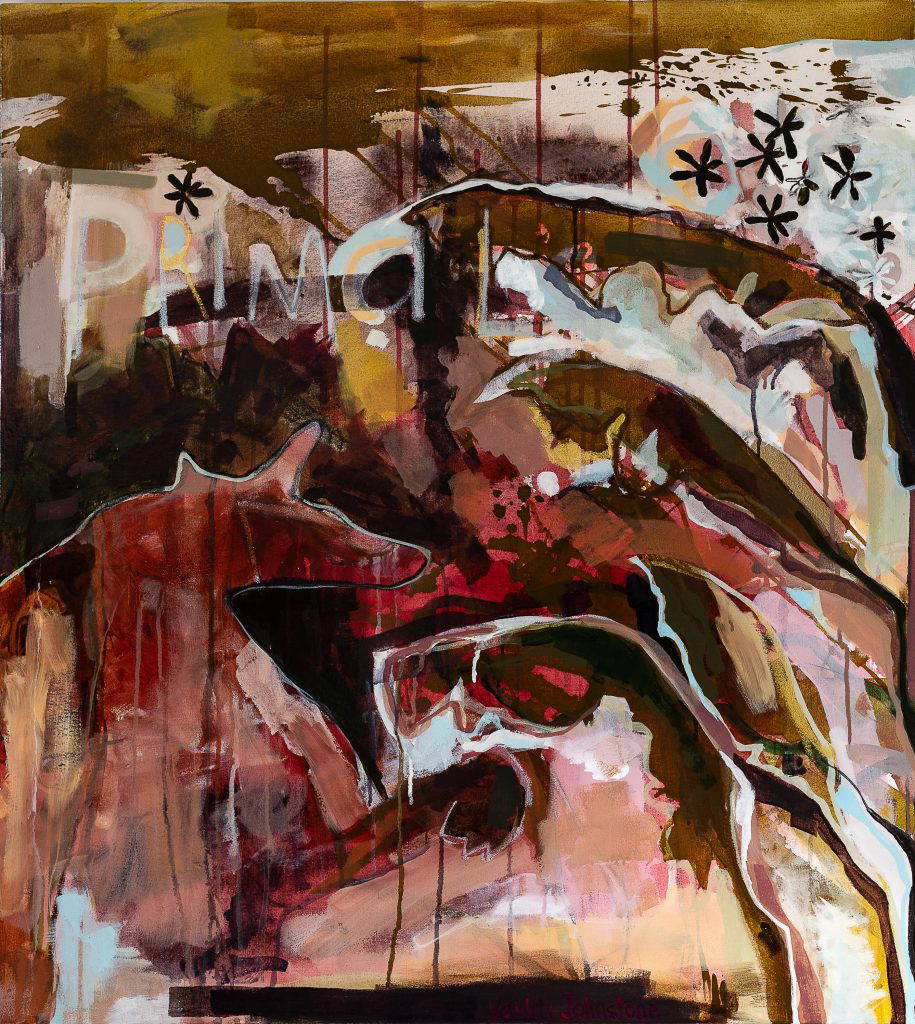
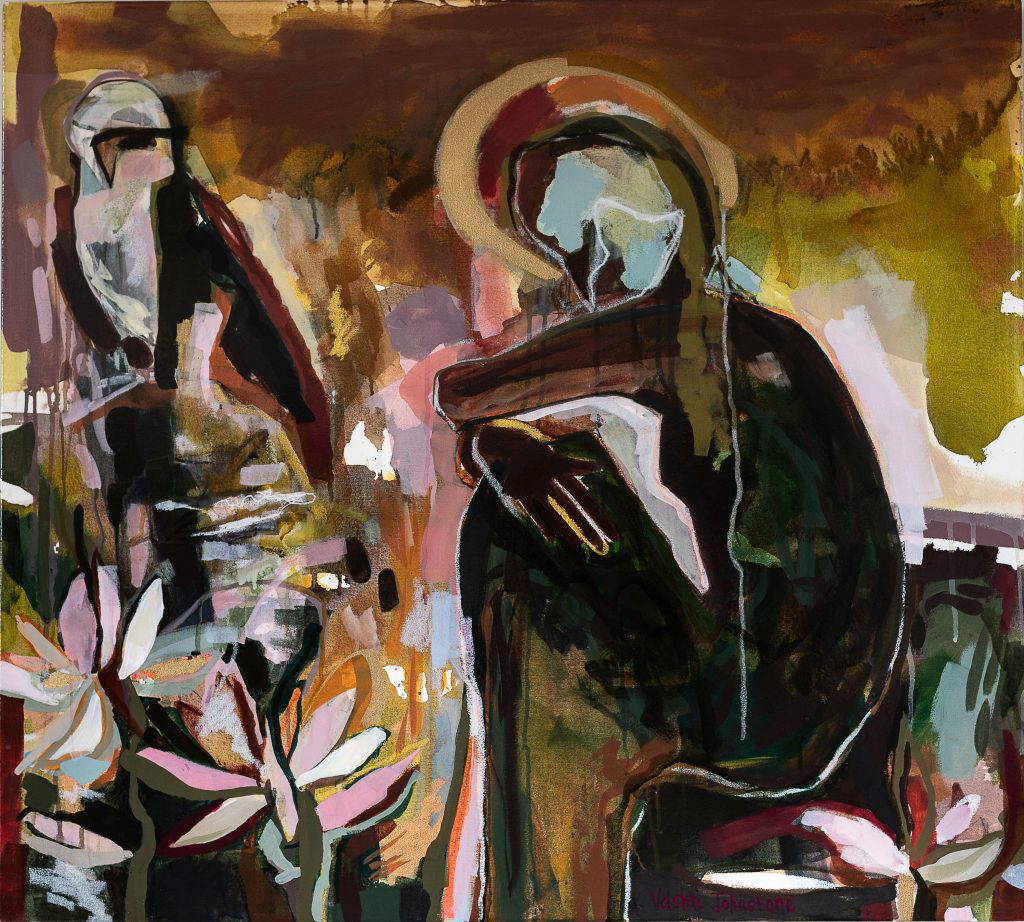
A reverential and otherworldly journey, Feral Grace is weighty with symbolism, each work rich with meaning and emotional resonance that pulls the viewer inward. A sacred arc, the life line, is etched into each work, echoing an invisible journey of vitality, transformation and awakening. Laden with Johnstone’s dense application of earth tones, representative of compassion, nurturing and wisdom, to feminine deities encountered during her residency in France: sacred, intuitive and caring, Feral Grace offers a place to lose oneself, to slow down and connect. Soaring birds become a metaphor for the relationship between the earthly and the divine, while domesticated animals offer a glimpse into a world of peace and prosperity. Johnstone describes it as ‘the wild intelligence of matter,’ her essence decanting into her work, an ethereal portal of transition, freedom and intuition, a way of being, and a place where the untamed and the sacred meet.
A mother of adult children, dispersed and scattered, Johnstone’s personal time has become her own. Replicating nature’s cycles of growth, change and renewal, her framework of nurturing others while upholding her artistic journey has shifted. Today, she is no longer constrained by the domesticated essentials of mothering. Instead, she will draw on her feminine qualities of intuition, imagination and courage. She will silence her inner hecklers and she will paint. Perpetually shifting, the pigments will lead, active participants in the process, and her next series will be born.
Based in Greymouth on the West Coast of New Zealand’s South Island, Vashti Johnstone is a contemporary painter whose practice is driven by a lifelong devotion to visual language. Since completing her Diploma in Painting at Aoraki Polytechnic (now Ara Institute of Canterbury, Timaru campus), she has continued to push her practice in energising and innovative ways, layering charcoal and paint into a colourful language that feels both grounded and otherworldly.
Pip Goldsbury is an independent writer and interior designer based in Akaroa, Aotearoa. Driven by a passion for people and places, Pip is a kaleidoscope of creativity on paper and in the home. She is a regular contributor to NZ Life & Leisure magazine and features across a multitude of platforms, from international art blogs to interior design columns and commercial content. Curiously creative, she is a wrangler of words and a disciple of coffee. Her Bachelor of Arts majoring in English Literature feels like a long time ago. Today, Pip is a storyteller of words and spaces, happiest adventuring alongside her husband and adult children. You can find Pip at https://www.quill.co.nz/