Painting with Smoke: The Art of Kulimoe’anga Stone Maka
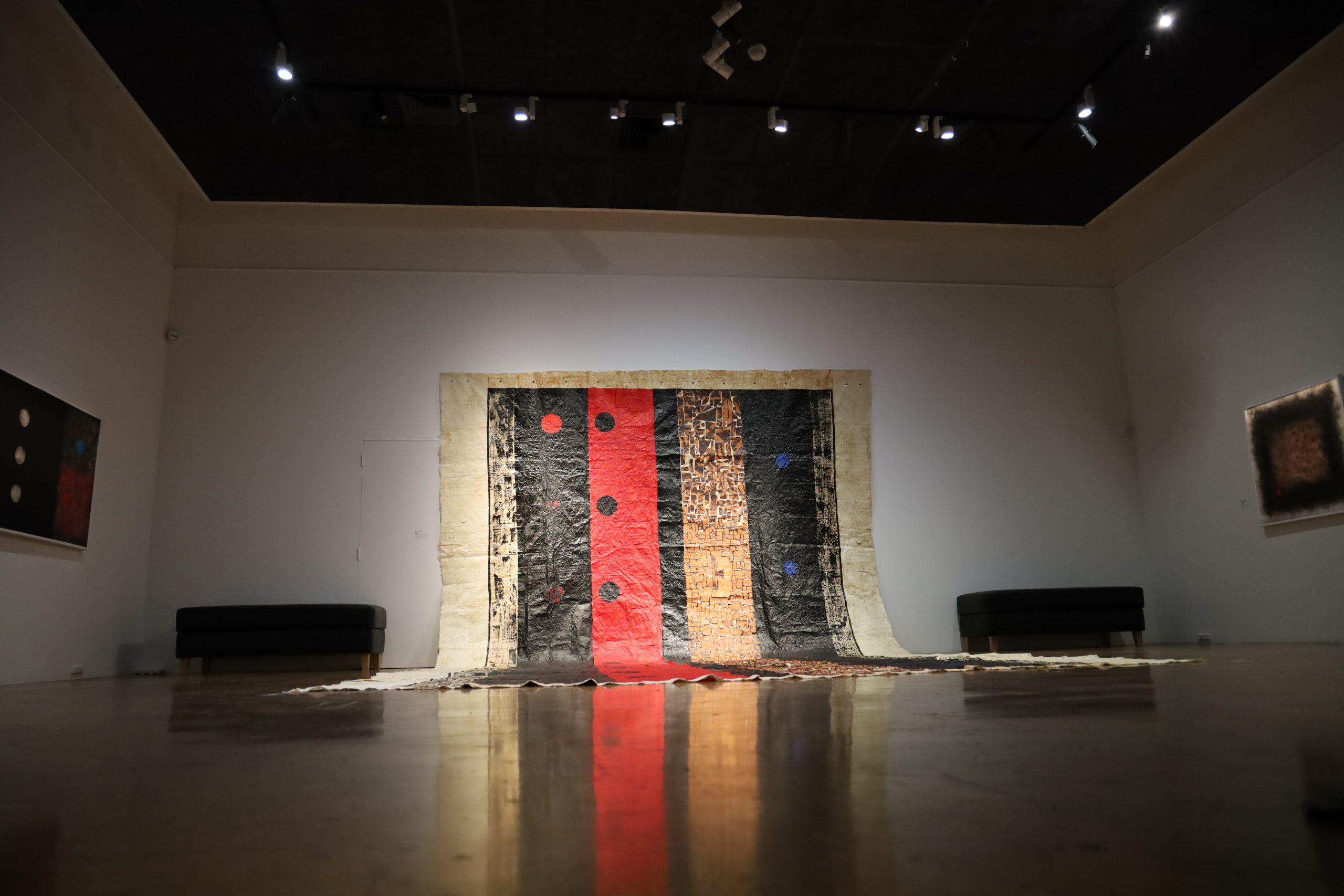
Kulimoe’anga Stone Maka stands as one of the most compelling contemporary artists working from Aotearoa New Zealand today, distinguished by a practice that fuses ancestral Tongan knowledge with experimental, often monumental, painterly processes. His work is rooted in the sacred art of ngatu tāʻuli, Tongan blackened tapa cloth, yet it consistently pushes beyond ethnographic expectation, asserting the place of Tongan abstraction within global contemporary art. The art is distinctive and asserts itself as something very special in the broader category of Pasifika art.
Raised in a large family in Pātangata, Maka grew up in an environment where making was inseparable from daily life: his father a carpenter, his mother a fisher and a maker of tapa. These early experiences formed the substrate of his artistic identity. He spent long hours by the ocean drawing and sketching, encouraged by teachers such as Professor Viliami Tolutaʻu and the poet-composer Ve’etūtū Pahulu, who recognised his talent early and nurtured his ambition to become a professional artist.
After completing his schooling at Liahona High School, Maka migrated with his family to Auckland and later settled in Christchurch, where his studio remains. His formal training began at Whitecliffe College of Arts and Design (1998–2001), followed by a Bachelor of Visual Art at Manukau Institute of Technology (2002–2004). During these years he returned to Tonga to deepen his understanding of ngatu tāʻuli, a rigorous research practice that would become the conceptual and material backbone of his mature work. Also apparent is the influence of European and American formalism from Matisse to Rothko, assimilated into a sophisticated twenty-first-century Pacific worldview.
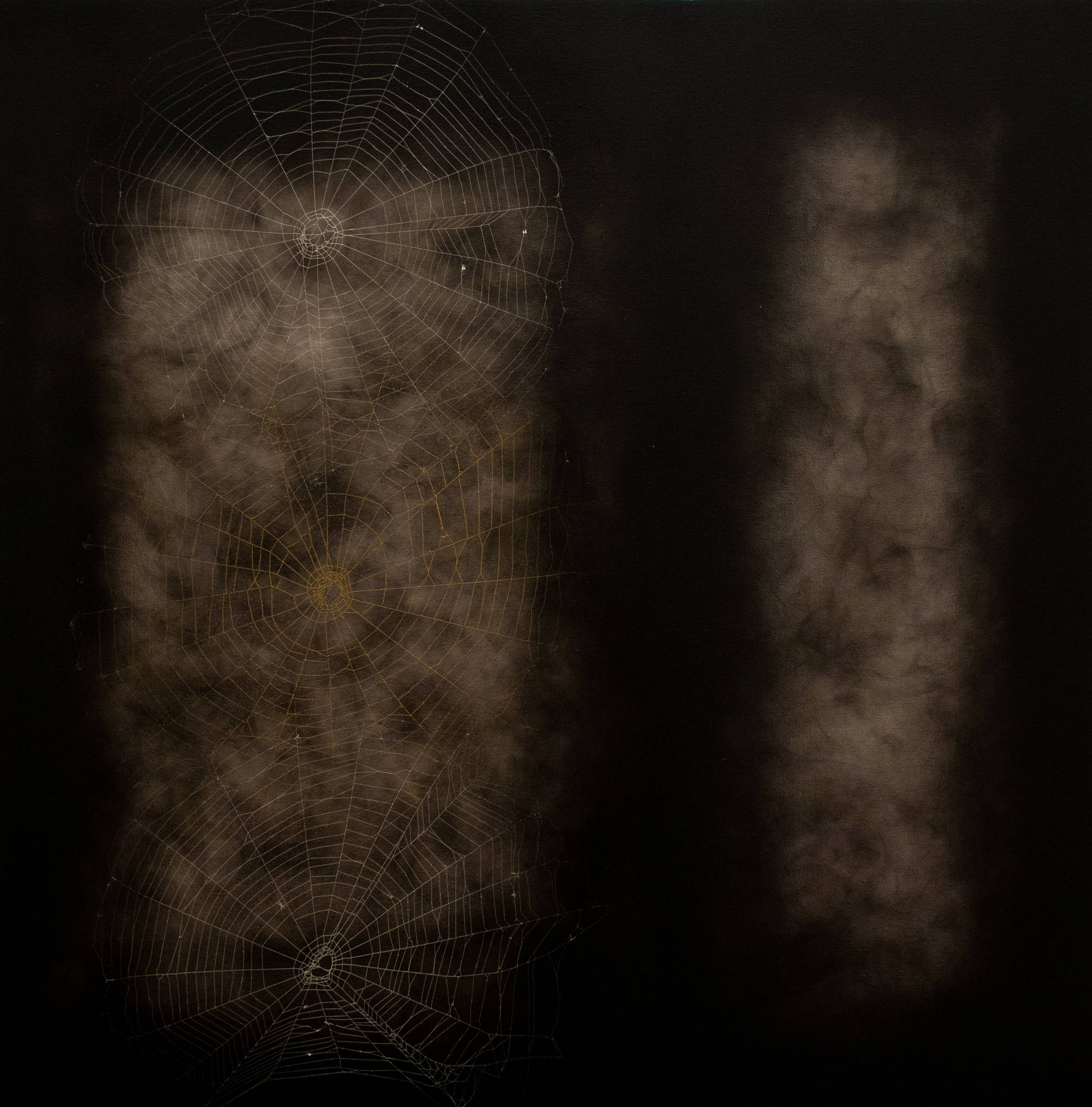
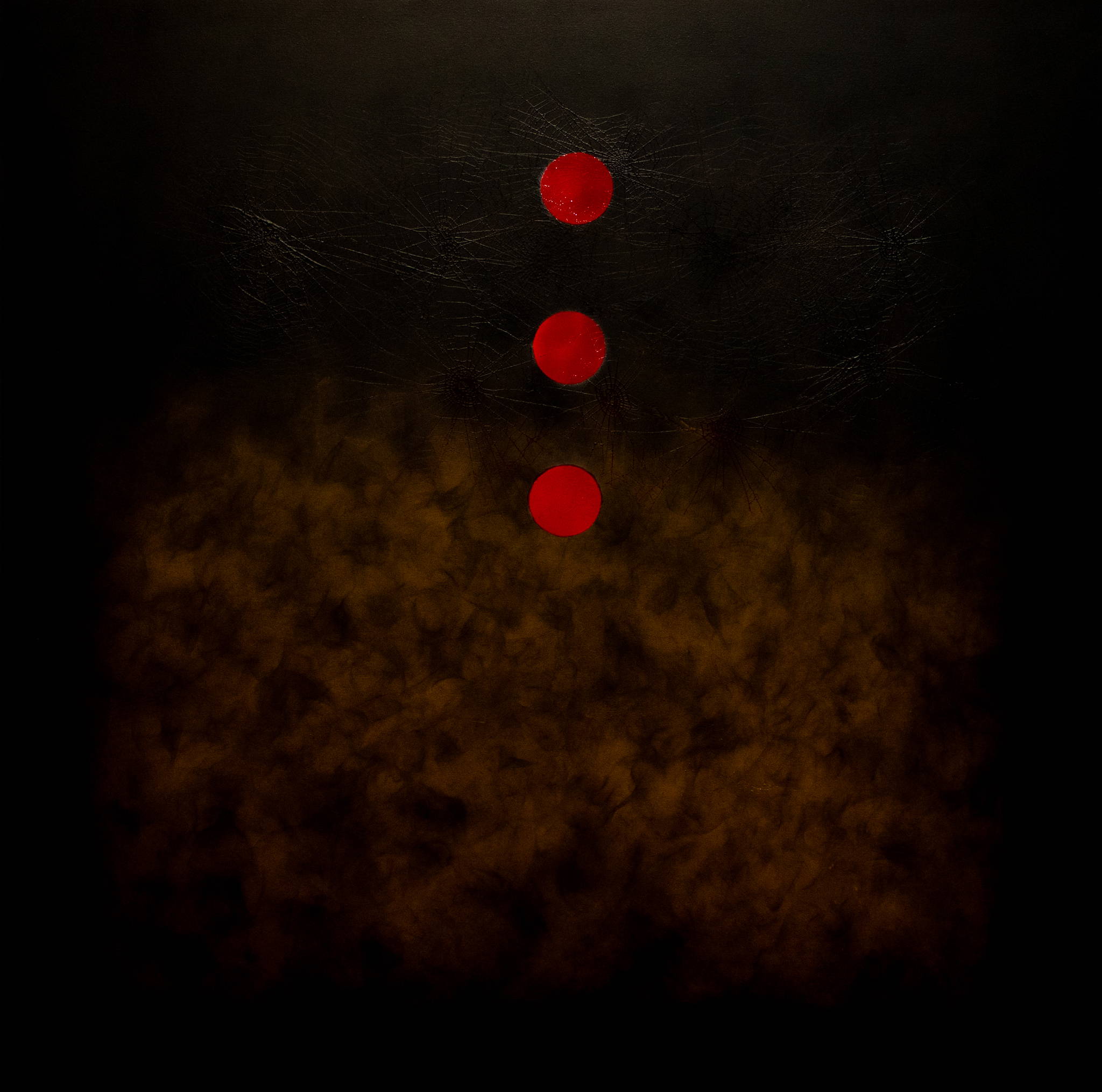
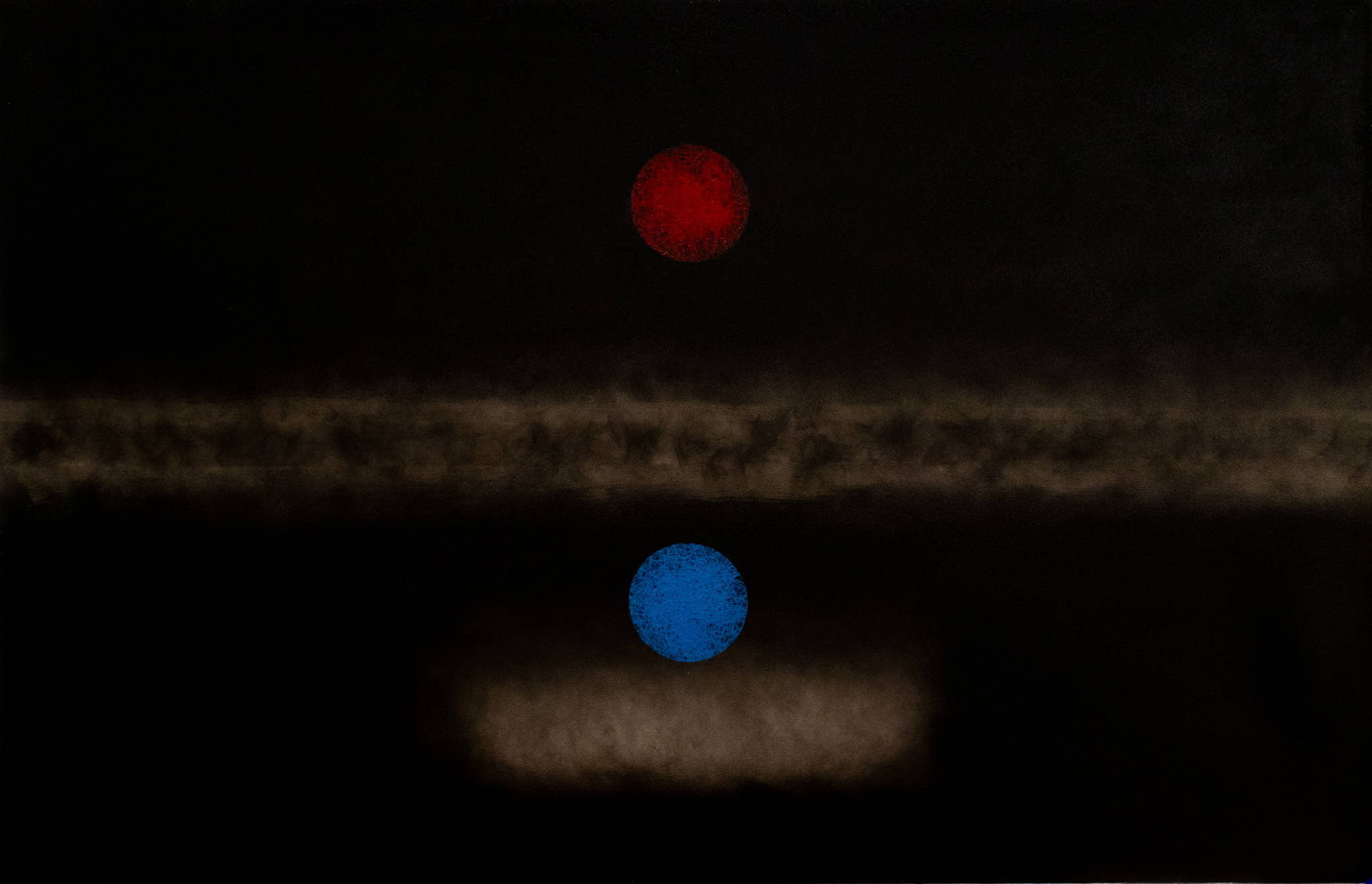
Maka’s art is often described as interdisciplinary, but the term scarcely captures the complexity of his method. He works at the intersection of painting, performance, ritual, and material culture. His blackened tapa works, sometimes vast in scale, are produced through processes that combine traditional barkcloth preparation with contemporary mark-making, fumage, and gestural abstraction. The resulting surfaces are dense, smoky, and atmospheric, evoking both the cosmological and the political. A particularly unusual feature of the works are the spiderwebs, carefully gathered, consolidated and applied to the surface as an extension of abstract form.
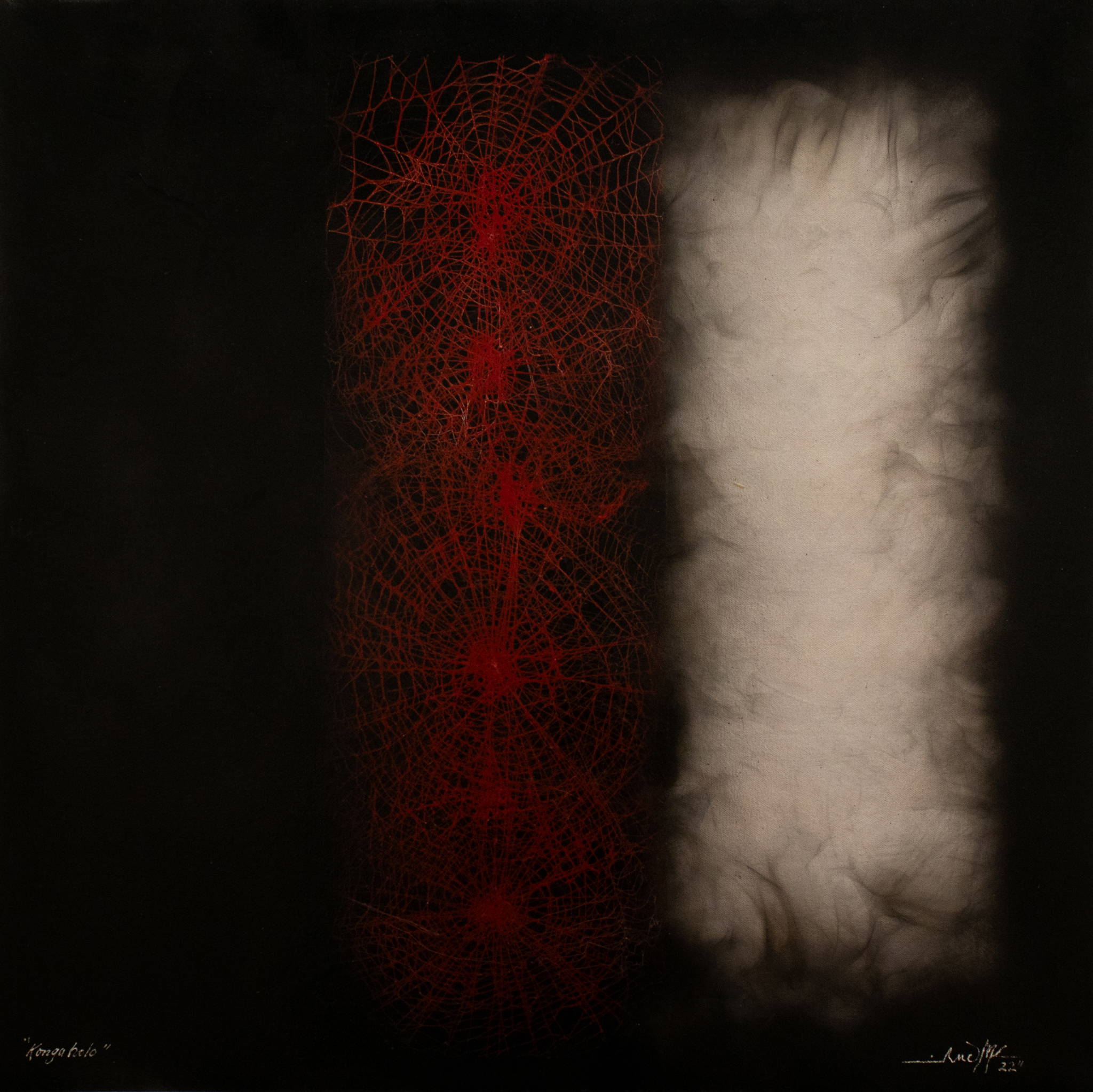
Maka sees Pacific abstraction as one of the region’s most expressive and pure forms of artmaking, and his work draws attention to the formalism embedded in Tongan visual culture since at least the eighteenth century. Ngatu tāʻuli is produced with candlenut soot and reserved for Tonga’s royal and aristocratic classes. Like Malevich’s black square they keep their secrets. Maka likens his personal vocabulary and syntax of abstraction to Lea Fakaʻeiki, the elevated and largely ceremonial register of the Tongan language used by Tongan royals and the highest of the aristocracy, largely incomprehensible to ordinary Tongans.
Recognition of his practice has been steady and significant. He received the Margaret Stoddart Award in 2008, followed by the Macmillan Brown Centre for Pacific Studies Artist Residency at the University of Canterbury in 2009, and the Creative New Zealand Emerging Pacific Artist Award in 2011. These milestones marked his transition from a promising emerging artist to a central figure in contemporary Pacific art.
His exhibition history is extensive, spanning Aotearoa, Australia, Tonga, and the wider Pacific. Key solo exhibitions include Ngatu tuʻuli / The Past is Now (CoCA, 2008), Toga mo Bolata’ane (Christchurch Art Gallery, 2021), and Kumi Ē Manatu (Finding Black Tapa Memories) (Jonathan Smart Gallery, 2022). His selection for the 22nd Biennale of Sydney in 2020 signalled his international standing and affirmed the global relevance of his project. Most recently he had a significant solo show at the Aigantighe Art Gallery in Timaru, KUMI MOE HELIAKI, in 2025–2026.
What distinguishes Maka’s work is not only its technical virtuosity but its philosophical depth. His practice is animated by questions of memory, migration, spirituality, and the endurance of cultural knowledge. The blackened tapa becomes a site where personal history and collective heritage converge: a surface that holds the smoke of burning plant matter, the rhythm of ancestral patterning, and the improvisational energy of contemporary painting. In this sense, Maka’s work is both archival and insurgent: it preserves, transforms, and reasserts Tongan visual sovereignty within global art discourse.
Today, based in Christchurch, Maka continues to expand the possibilities of ngatu tāʻuli, treating it not as a static tradition but as a living, evolving language. His work speaks to the resilience of Pacific cultures, the complexities of diaspora, and the power of art to bridge worlds: oceanic, spiritual, and aesthetic.
Kulimoe’anga Stone Maka (b. 1970, Pātangata, Tonga) is a Tongan artist based in Ōtautahi Christchurch, Aotearoa New Zealand. Raised in a family of twelve and immersed from childhood in the traditional arts of tapa-making, weaving, carving, canoe building, and the metaphorical language of heliaki, he developed an early creative sensibility shaped by village life and limited material resources. After attending Liahona High School, he migrated to New Zealand in 1997, later studying at Whitecliffe College of Art and Design and graduating from Manukau School of Visual Arts in 2005. He relocated to Christchurch the same year, where CoCA Gallery first supported his emerging practice. His works are now held in major public collections, including Auckland Art Gallery Toi o Tāmaki, Museum of New Zealand Te Papa Tongarewa, Christchurch Art Gallery Te Puna o Waiwhetū, and the National Gallery of Australia.
Andrew Paul Wood is a Timaru-based independent cultural historian and commentator, art writer, book reviewer, essayist, translator and poet. He writes for a number of prominent publications in Aotearoa and Australia. He was the co-editor and translator with Friedrich Voit of the collection Karl Wolfskehl: Drei Welten, Three Worlds (Cold Hub Press, 2016), Dunediniad: A Psychogeographical Ode (Kilmog Press, 2018) and The Sonnets of Walter Benjamin (Kilmog Press 2020). His latest book is Shadow Worlds: A History of the Occult and Esoteric in New Zealand (Massey University Press, 2023).