Party Boy
Party Boy by Breton Dukes. THWUP (2026). RRP: $38.00. PB, 320pp. ISBN: 9781776923038. Reviewed by Niamh Hollis-Locke.
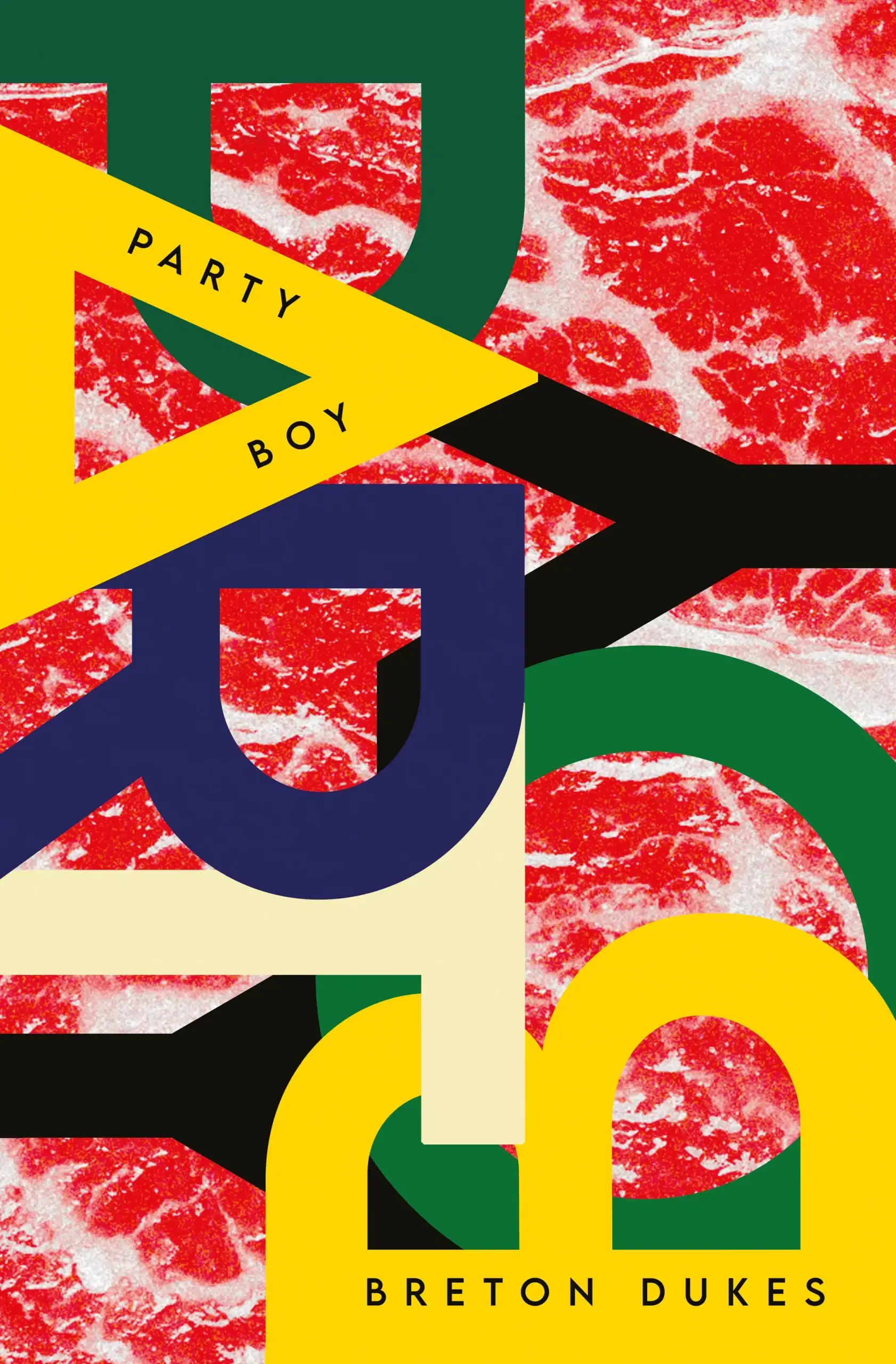
In 2022, spurred by the 2014 conviction of former Otago Boys High School (OBHS) teacher David Bond for indecent assault against a student in the 1970s, and the wave of further convictions which followed, author Breton Dukes began interviewing fellow OBHS alumni. While he says his original goal was to ‘write a non-fiction project about Otago Boys and especially David Bond,’1 the material proved too heavy, and Dukes had to change tack. The novel that emerged four years later was Party Boy. Drawing on Dukes’ own experiences of attending OBHS and what came after, this debut novel is a powerful interrogation of New Zealand masculinity culture and the damaged, haunted men it creates. In an interview with Newsroom, Dukes explains he ‘spent the last 20 or 30 years making sense of [OBHS],’ where he primarily ‘learned … how to keep [his] head down, how to not stand out.’ Given all of this, it is tempting to categorise Party Boy as a work of autofiction. Indeed, Dukes names Karl Ove Knausgård, the Norwegian author best-known for his series of autobiographical novels, as an important influence on his own writing, and within Party Boy, many of Marco’s life-experiences look like Dukes’ own. Like Dukes, Marco works part-time at a bar in Dunedin. Like Dukes, Marco went to OBHS in the late 80s and was significantly negatively impacted by it. Like Dukes, Marco has multiple school-aged children for whom he is the primary stay-at-home caregiver while his wife works a high-powered job. However, Dukes insists that Party Boy is not directly autobiographical, pointing to the fact that he never lost a child he was supposed to be taking care of, and how while substances quickly become a crutch for Marco, his own usage has been far more measured. Autobiographical or not, Dukes’ examination of New Zealand’s masculinity culture is well-observed and enjoyably nuanced, with an eye for the subtler ways in which the pressure to be a real man—as well as ideas about what that man is supposed to look like—manifest in this country.
For men of Dukes’ generation, the version of masculinity they were taught tended to emphasise being athletic, stoic, and aggressively heterosexual, and it is the impacts of these expectations that we see in Party Boy. Men like Marco are not allowed to talk about their emotions or have mental illnesses, and if they have problems in their life it is easier to blame someone else rather than admit ‘weakness’ by taking accountability. Indeed, in the lead-up to the party, Marco begins slipping up at work due to his increasingly fraught emotional state. When questioned by his boss he explains his behaviour by implying his marriage is in a rocky place, placing the responsibility on an external party (his wife) rather than revealing that his struggles are psychological and largely personal. The character work here is one of Party Boy’s greatest strengths. Marco is believably flawed, and creates many of his own problems; his default state of being is avoidance driven by a desire to fit in and keep out of trouble, which usually makes situations worse in the long run. Party Boy often finds Marco torn between improving and sabotaging his own life. He starts seeing a therapist, demonstrating self-awareness and a desire for change, but struggles to apply his learnings beyond appointments as it requires a level of emotional honesty and vulnerability he finds threatening. Marco recalls traumatic events from his earlier years—emotional abuse from his parents as a child; violent bullying at high school (which he sometimes instigated); and one particularly harrowing incident at around age nine, featuring a possible stalker and a pursuit which culminates in Marco fighting off a dog alone on the sea shore. The memory of the latter incident with the dog can be read as a metaphor for Marco’s life as a whole: running from problems without seeking help until things reach a point where he is forced to turn and face the issue head on, whether he wants to or not.
Throughout Party Boy, we often get a sense that Marco is performing or trying to prove his masculinity to others, and the eponymous party, with its rapidly ballooning guest list and massive budget blow-out, exemplifies this. While preparing, Marco’s thoughts are consumed by how his guests will view him. He tries to buy the most expensive champagne and best cuts of meat, as well as planning the most elaborate desserts, in order to prove to his guests—many of whom he has not seen since high school—that he is doing well in life. The meat, and the cooking of it, is central to Marco’s vision of how the party should play out. It occupies his thoughts even while preparing other dishes, and he is willing to go to any length to make sure it gets cooked. On the day of the party the wind is high, creating a dangerous environment for cooking outdoors. Convinced the whole party will be ruined if he can’t provide meat, Marco ignores his wife’s concerns and his own better judgement, putting himself and his guests at risk by cooking right beside the house. Here, the act of cooking becomes a performance. Guests crowd around to watch, while descriptions of barbecuing blend with the language of a sports-match. The watching guests cheer him and his assistant on—or so he imagines—in the way the crowd at a game might a good bit of action, calling out his teenage nickname from when he was on one of the school teams. This is particularly well-observed. In this country, meat and masculinity go hand in hand; being able to cook a good steak on the barbecue seems to be almost as strong an assertion of masculinity as playing rugby or being on a national sports-team, and woe betide anyone vegetarian.
Thankfully, the novel never feels like it is trying to preach. In my experience, too many stories featuring mentally ill characters end up being something that ‘tackles’ a theme and goes no further; narratives that fall into that trap are generally characterised by a reliance on tropes and two-dimensional characters, as well as a tendency to romanticise or make dramatic which often ends up doing more harm than good. As a result I was a little trepidatious when I opened Party Boy, but I needn’t have worried. Marco is allowed to be a complex, multifaceted human with the capacity for change, rather than someone presented as fundamentally good or bad and stuck that way forever. Dukes’ novel is refreshingly nuanced in its exploration of Marco’s psyche and the experiences that have shaped him, while also being an accessible and well-paced read. A compelling debut novel with a singular clarity of vision, Party Boy is a book that many will find cathartic, affirming, and illuminating.
1 Agluba, Justin. “A troubled past with Otago Boys High.” Newsroom, 09.02.2026. https://newsroom.co.nz/2026/02/09/the-trouble-with-otago-boys-high/
Niamh Hollis-Locke lives and writes in Te Whanganui-a-Tara. Her work has been published widely in Aotearoa as well as overseas, and in 2023 she was shortlisted for the Ginkgo Prize Best Poem of the UK Landscape award. She was the guest-editor of Minarets 14 (Compound Press, 2024). Niamh holds a BA and BA(Hons) in English Literature, and a Master’s in Creative Writing specialising in ecofiction.