The Clean: In the Dreamlife You Need a Rubber Soul
The Clean: In the Dreamlife You Need a Rubber Soul by Richard Langston. AUP (2026). RRP: $49.99. PB, 376pp. ISBN: 9781776711567. Reviewed by Joanna Mathers.
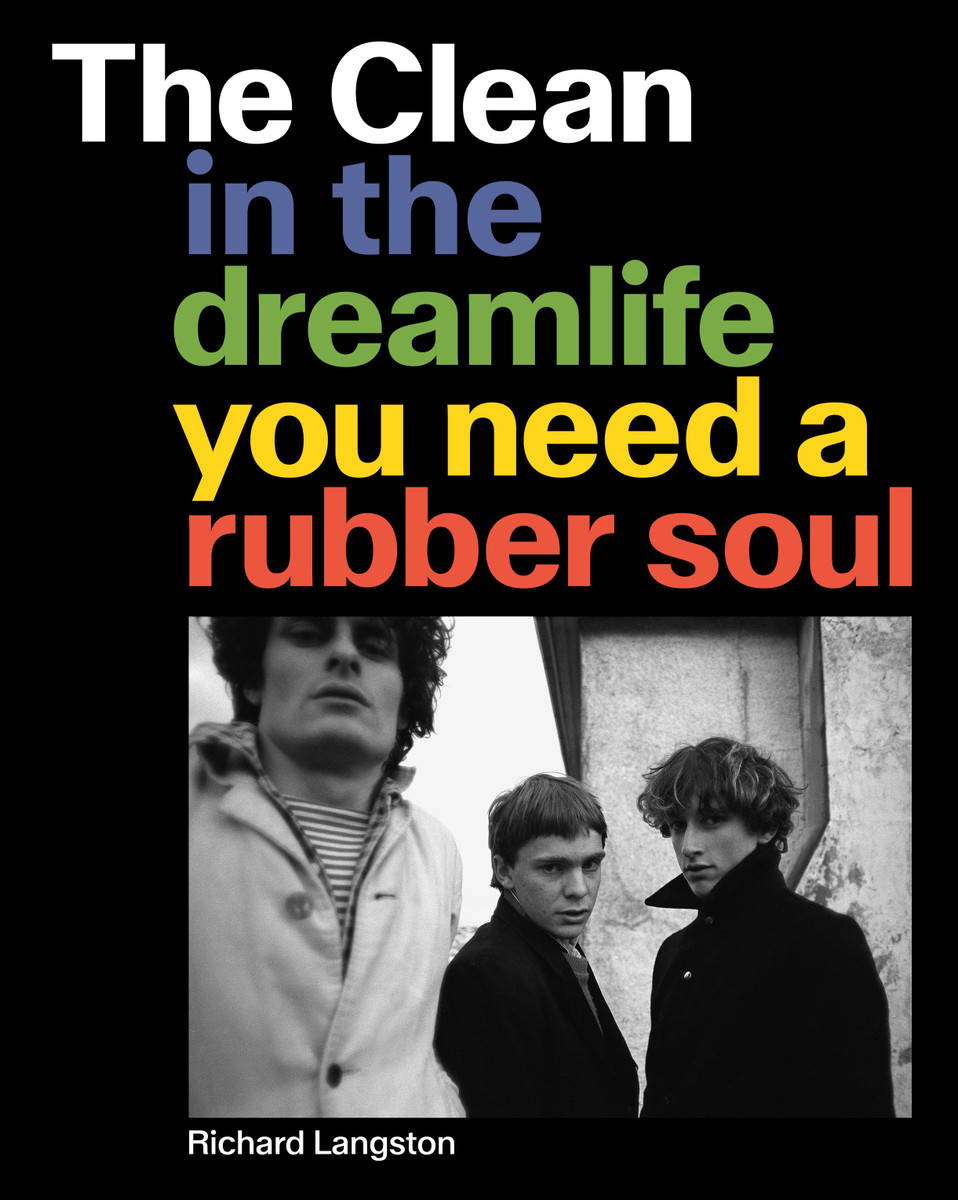
Music artists The Clean emerged from Dunedin in the late 1970s and have exerted an oversized influence on independent music ever since, both in Aotearoa and internationally. Shaggy, shambolic, with a sound rooted equally in punk and West Coast psychedelia, the band were celebrated for their ear-bleeding live performances, including a legendary gig in 1982 supporting The Fall in Christchurch (where they were met with abuse and flying objects) and the instant impact of their first EP Boodle, Boodle, Boodle. The success they achieved was significant … and then in the early 1980s, they broke up. They regrouped later in the decade, successfully riding the era’s alternative zeitgeist to release five more albums.
The Clean: In the Dreamlife You Need a Rubber Soul by poet, journalist and television director Richard Langston is an in-depth exploration of this band that inhabits a unique cultural space, alongside equally iconic artists such as The Chills and The Verlaines, fellow progenitors of the ‘Dunedin sound,’ drawing on interviews, diary entries, letters, photos and album art to craft a compelling oral and visual history. At 376 pages, it’s also a hefty work, with a low-fi, cut-and-paste aesthetic. The design may be a nod to Langston’s editorship of 1980s fanzine Garage, which documented the nascent Flying Nun scene. (Only six issues of Garage were released, with The Clean profiled in two of them.)
A long-time fan and friend of the band ever since, Langston was uniquely positioned to author this book. In the preface, he recalls pontificating about authoring a book about Flying Nun with David Kilgour: ‘“No,” David responded, “write one about us!”’ David was one of the original members, along with brother Hamish Kilgour: the others were Peter Gutteridge, then Doug Hood and later Robert Scott, their 1960s inspired guitar, driving drums, and idiosyncratic lyrics displayed an impressive musical literacy.
As youngsters, David and Hamish trawled the bins at Roy Colbert’s Records Records, a legendary store on Dunedin’s Stuart Street, bringing home gems that would inspire their later output—The Velvet Underground, The Ramones, The Saints. Their music, and the wider punk-inspired scene surrounding it, was a welcome counterpoint to the booze-and-rugby mainstream culture of the time.
The book works best as a snapshot of time and place. It’s exhilarating to read the recollections of the band members and fellow travellers who inhabited the 1980s’ Kiwi cultural renaissance. And the words of those who have since departed, such as Hamish Kilgour, Martin Phillips, Peter Gutteridge and Jim Wilson, are particularly poignant.
Wonderful synchronicities are revealed. Jim Wilson, founder of Phantom Billstickers, was a leading music promoter in Christchurch in the 1970s and 1980s. He booked The Clean to play at the Gladstone Hotel in 1980 where, according to reports, they ‘blew the back wall out of the Gladstone.’ Roger Shepherd, founder of Flying Nun, happened to be in the audience that night. He was contemplating starting a record label and observed that The Clean were ‘the real deal.’ He asked if they wanted a recording contract. They did.
Flying Nun was born that night and a year later, Boodle, Boodle, Boodle reached number five in the national music charts. They split up in the early 1980s due to touring and familial pressures, but after that time the Kilgours went on to release two more albums as The Great Unwashed, alongside two rarities albums Odditties and Odditties 2, a compilation album (called Compilation) and a live album entitled Live Dead Clean.
As the book reveals, the band reformed to play a gig in London, with a crowd of ‘expat Kiwis, their mates, and London hipsters.’ They received great underground music coverage and Hamish recalled that ‘“none of the magic had disappeared.”’ David was equally upbeat in his response: ‘“It was like putting on an old coat, it just flowed. This is great, this is fun.”’
It’s an indication of the band’s international importance, also documented by Scott Kannberg, co-founder of Pavement. He recalls singer Stephen Malkmus playing him two of their singles, ‘Beatnik’ and ‘Anything Could Happen’, in the late 1980s. ‘“It was like the best of the Nuggets, but new! And weird because it was from NZ.”’ Pavement would go on to list The Clean as one of their most important influences.
The book features beautiful photography, posters and other imagery, but I had one gripe; the use of font size and weight to represent different textual components. I found it distracting to have three or four typographic elements appearing on the same page—interviews appear in small Roman font, letters in larger Roman font, and historical notes are bold. This, again, may be a nod to the cut-and-paste aesthetic favoured by fanzines, but it felt incongruous and distracting. Break out boxes or other graphic elements would have worked better here.
Nevertheless, The Clean: In the Dreamlife You Need a Rubber Soul is a welcome addition to Aotearoa’s musical history. The protagonists’ voices and visions have primacy, the book can be used for dips or deep dives, and it resurrects an epoch that birthed some of New Zealand’s greatest music.
Joanna Mathers is the owner of Informed Media, a small independent publishing company. A former arts and music journalist, she authored a book about New Zealand music venues, Backstage Passes, in 2018.