Before the Winter Ends
Before the Winter Ends by Khadro Mohamed. Tender Press (2025). RRP: $30.00. PB, 289pp. ISBN: 9780473737405. Reviewed by Neema Singh.
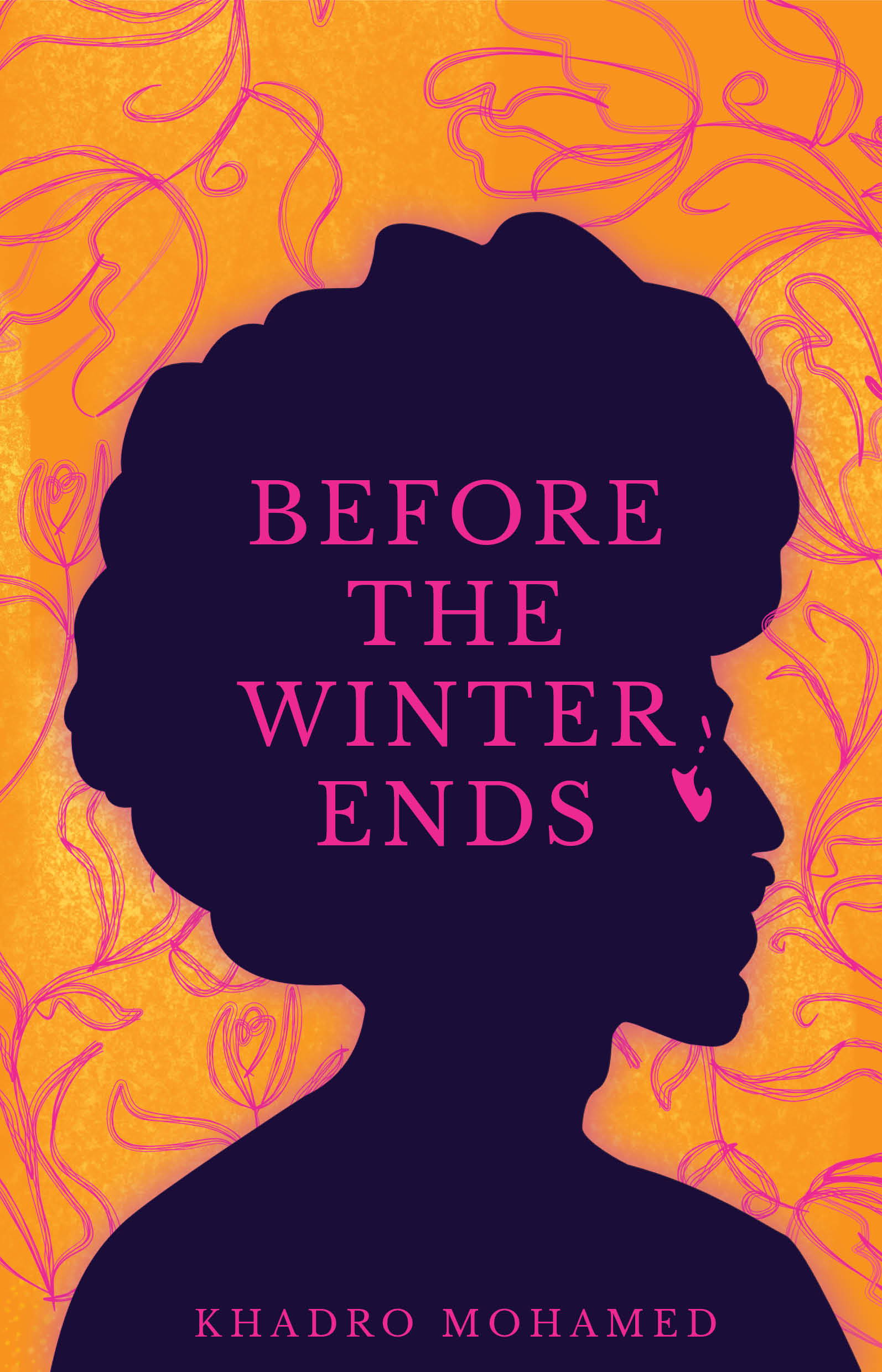
Khadro Mohamed’s stunning debut novel Before the Winter Ends could be read as a companion piece to her award-winning 2022 poetry collection We’re All Made of Lightning: the vivid imagery of Aotearoa New Zealand, Somalia, Egypt and East Africa infuses both books with a clear sense of place, despite the profoundly uncertain and lonely spaces the poems and characters inhabit.
The novel follows Omar, a Somali New Zealander living in Wellington and studying biology at university. He lives with his mother, who migrated to New Zealand while pregnant with him, escaping the war as it escalated in Somalia. The novel opens with the death of Omar’s father and a brilliant opening sentence: ‘Omar’s father has died twelve times by the time Omar gets out of the shower.’ We are immediately drawn into Omar’s world through this simultaneously shocking and matter-of-fact statement.
The novel is structured in three parts: Wellington in 2019, Cairo and Mogadishu in 1999 and finally Cairo in 2019. Part 1 is an immersion into Omar’s world. He skips lectures, barely makes it to a lab session and seems to be generally clueless about what he should be doing. There’s also his increasing anxiety for his ill mother who refuses to see a doctor and instead insists on the healing effects of reading the Quran, his awkward attempts at building closeness with his childhood friend Nick, and daily battles with Wellington winter weather. The near-constant rain in this section of the book provides a backdrop for the intense loneliness that emanates from Omar, reaching out from beyond the pages to creep, fog-like, into the heart of the reader. Omar’s loneliness is the loneliness of a person displaced from their country, culture, whānau, heritage and language. This displacement is not Omar’s alone; in Part 2 we see his mother Asha’s sense of displacement in Cairo, away from the familiarity of her home in Mogadishu. In contrast, Omar’s father relishes exploring the world, yet he, too, embodies displacement—this is a man who sacrilegiously defies Somali tradition by being unable to trace his lineage (through no fault of his own). Layered beneath the characters is the unfolding war in Somalia, portrayed in terrifying detail: a permanent displacement between the land and its people.
Food is a constant throughout, offered as an antidote to the sense of loss and loneliness. It offers solace, comfort and signifies the love of family. Omar goes to painstaking efforts learning to cook injera for his mother and is often seen either making shaah for his mother or bringing it to her. An emotional reunion in the novel is marked by food: ‘Asha’s mother serves the two of them bowls of fried beef cubes drenched in oil and cardamom shells, hot injera on the side’. This simple yet poignant description carries with it the love of a mother and grandmother. The food also serves to orient us within the East African setting of the novel: there is pomegranate juice, mango juice, figs, sumac berries, tomatoes and olive oil. As with other cultural references in the novel, the food is woven into the fabric of the book without explanation. And so we see the world through Omar’s eyes and through Asha’s eyes and this then becomes our world.
Omar’s afro hair is a central motif of the book. His hair is defiantly big and he takes great pride in this. His hair also serves to highlight moments of racism, such as when his lab instructor tells him curtly to tie his hair up, while ignoring others in the class with long untied hair. This seems a small incident, but deeply impacts Omar and his sense of belonging. Through Omar, Mohamed explores complex ideas of identity, culture and nationality. At one point Omar reflects on his own New Zealand identity:
‘Omar doesn’t really have a “people.” He used to think that he could blend in with Pākehā New Zealand seamlessly. He thought he could pretend. That no one looked closely enough to see that he was different. But then he got to high school and his maths teacher made an effort to remind him every week that he was, in fact, not really a Kiwi … Omar doesn’t even want to be Kiwi, whatever the hell that means. He just wants to be.’
As a first generation New Zealander like Omar, I find great comfort and joy in seeing my own thoughts about belonging and identity expressed so perceptively and accurately in this novel. It feels less lonely to see others grappling with similar feelings.
Before the Winter Ends is not a novel driven by action and plot points. Instead, we are steeped in Omar’s world and the world of his family, much like the shaah Omar brews on his stovetop. Reading the book is an experience to savour, an experience simultaneously sad, sweet, heart-wrenching and tender. Omar attends uni lectures, he goes to coffee with his friend Nick, he makes shaah for his mother, he attempts to write in Arabic, he tries to pray. We are with him as he thinks of his father and wonders what he was like. We are there with Asha as she moves between Mogadishu, Cairo, Nairobi and New Zealand. Mohamed invites us to join in these experiences without explanation or justification; we are simply present.
Mohamed’s close attention to building detailed descriptions works beautifully to create this sense of immersion. An example of this is in the opening chapter, where we have a description of Omar’s imaginings of his dead father: ‘His fingernails, square like Omar’s, are caked with dirt and algae that has turned from green to black.’ Later in the book, Mohamed writes a description of Fardowsa and how she ‘reveals her dark brown eyes, her long lashes brushed back with a thin layer of mascara. Omar sees the tiny black marks just beneath her waterline where her mascara stick has missed the hairs and landed on her skin.’ This extraordinary and vivid detail makes for a wonderful reading experience.
What I love about this novel is the lack of explanation or translation. I admire Mohamed’s unapologetic confidence in this. There are Arabic words, foreign places, multiple languages, an array of food and none of this is translated or explained for the reader. This also extends to its global worldview: while a distinctly Aotearoa New Zealand novel, this book also seeks to explore life in East Africa, where Somali people travel to Egypt and struggle with the language because conversational Egyptian Arabic is quite different to Quranic Arabic. They consider moving to Nairobi, but then think about the practicalities of not knowing Swahili well. There is a nuanced portrayal of these East African countries and their differences that makes this not only a compelling book, but an important book. I have a personal connection to East Africa with my maternal grandparents migrating to Kenya from India and paternal grandparents migrating to Uganda from India. As a result, my parents were born and raised in Kenya and Uganda and I grew up hearing stories of walks along Lake Victoria, the rich abundance of fruits and vegetables and spoke Swahili words as if they were my own. To see these worlds come to life in print is a revelation to me and I am grateful to Mohamed for creating and sharing this. The stereotyping of Africa is captured effectively in Omar’s exchange with his aunt Fardowsa who lives in Tanzania and mentions she had Chinese takeaway for dinner:
‘“There’s Chinese people in Tanzania?” he’d exclaimed. It was funny to think about now. “Are there Chinese people in New Zealand?” she’d replied. He could imagine her rolling her eyes.’
The novel dispels stereotypes and assumptions about Africa through a sustained and genuine portrayal of the details and nuances of life in this part of the world. Before the Winter Ends is a considered and thoughtful debut novel. The beautifully written language conveys powerful ideas around loneliness, human connection and identity, making this an immersive and rich reading experience. Khadro Mohamed has established herself as a talented writer giving voice to significant stories, places and people.
Neema Singh is a poet and features editor at Flash Frontier. Her work has appeared in Te Moana o Reo: Ocean of Languages, Ōtautahi is Flash!, paint me NZPS anthology, white-hot heart NZPS anthology, A Clear Dawn: New Asian Voices from Aotearoa New Zealand, Ko Aotearoa Tātou: We Are New Zealand, and NZ Poetry Shelf. She holds a Master of Creative Writing from the University of Auckland.