Between Dreams: Resistance and Representation in Asian Aotearoa
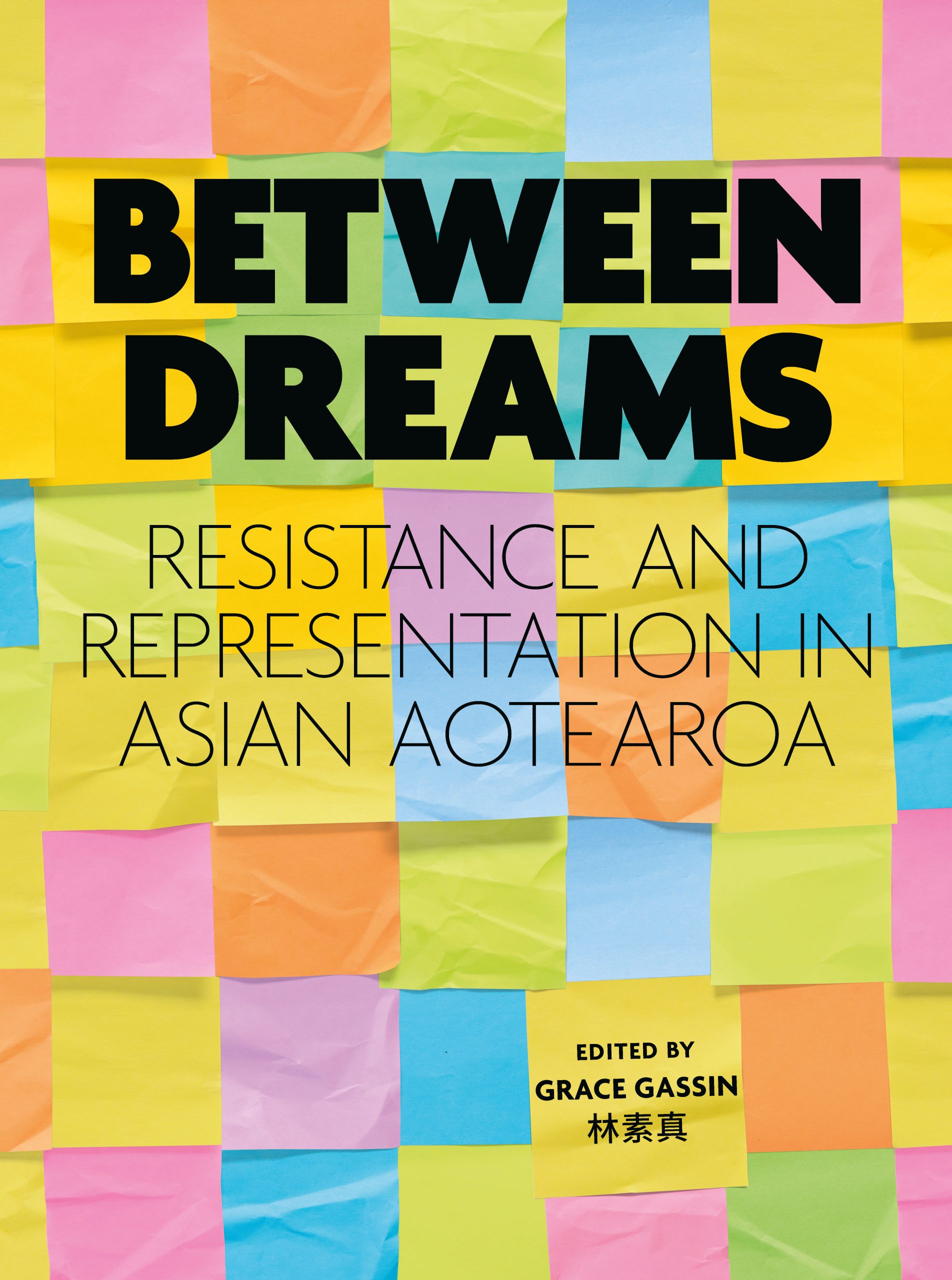
Between Dreams: Resistance and Representation in Asian Aotearoa edited by Grace Gassin. Te Papa Press (2026). RRP: $50.00. PB, 288 pp. ISBN: 9781991165589. Reviewed by Brannavan Gnanalingam.
In Priyamvada Gopal’s radical book, Insurgent Empire: Anticolonial Resistance and British Dissent, Gopal looked at the history of anti-colonial struggles as not simply being one of struggles from the countries seeking independence, but originating from within the UK itself. However, these battles within the UK were being driven from the margins—marginalised peoples who were doing the hard work of decolonisation. It was them who forced colonial governments and capitalist organisations to change, they who were doing the hard work of crafting the narratives. The book re-contextualised histories that are typically presented as otherwise being driven by ‘top down’ (in a power sense) narratives.
In Between Dreams: Resistance and Representation in Asian Aotearoa, a similar focus has been adopted in setting out what it means to be an Asian in Aotearoa. The book presents a plurality of voices sweeping in from the margins, rather than the more standard essentialised histories that get told about us of Asian heritages or presented by New Zealand First when they’re behind in the polls. Complementing (and contradicting) the prose essays are photos and additional narratives based on photographs and items contained in Te Papa’s archives.
Asians have been in Aotearoa as long as the British, and the book opens by focusing on the initial relationships formed with tangata whenua. Indeed, Asians have been an integral part of the colonial project, so this was a critical starting point for the book. There’s an uneasiness about this initial sense of belonging in Aotearoa that is typified by the in-betweenness inherent in the tragic story of the SS Ventnor’s sinking off Hokianga in 1902 (the ship contained the remains of 499 Chinese miners who had died in Aotearoa and were en route to being re-buried in their ancestral villages in Guangdong).
The book covers a lot of ground. This includes intersections with the Pacific (Samoa and Fiji / Girmitya identities); labour struggles that focus on union struggles or responding to migrant exploitation. There are poignant discussions of queer identities and disabled identities, and the double ‘Othering’ that occurs. There’s an attempt at reconciling personal narratives with contradictory national narratives (notably in Rebekah Jaung’s account of being Korean and the obvious lingering effects of the Korean War, a war Aotearoa fought in). There’s also the contemporary impact of internationalised narratives from Asia itself, and how this can impact the local (Hindutva in terms of becoming one of the defining Indian narratives, Hong Kong identities post-1997).
It was perhaps the smaller stories that were the most fascinating in the book, typified by the brief biographies of people who had lived in Aotearoa and their heirlooms and artwork. The objects and the ‘ordinary’ people who were represented by those objects were revelatory. There’s a sense of excavating narratives that have rarely been told in standard attempts to create a national identity. It also showcases a diversity of experiences and cultural practices throughout our modern history. This aspect of the book in particular helps make the book essential (and it must be said, beautiful)—it shows just how embedded Asians have been in Aotearoa since 1840.
There is far too much ground that could be covered, that it is no surprise that there are many gaps in the narratives of ‘Asian-ness.’ Perhaps there are too many gaps for it to be a truly comprehensive account. West and Central Asia is left alone, religion is largely ignored, and South Asia mostly relegated to discussions about Hindutva. For example, given the three essays from three activists (who are doing wonderful things in the public sphere drawing attention to Hindutva) largely say the same thing—that Indian identities are being co-opted into a far right Hindu chauvinist narrative and our politicians are too stupid to realise this—it would have been useful to have an account from the people who are being marginalised by Hindutva. But these are minor quibbles, and in many respects, this book is a provocation; one that should lead us to uncovering many more of these histories, and listening to many more of these voices.
But to be truly comprehensive doesn’t seem to be the intent, in any event. One of the fascinating things about essentialised uses of ‘Asian’ is that it’s used to describe over half of the world’s population, and nearly 20% of the population in Aotearoa. There is simply no way that a book can capture the plurality of those voices, nor should it ever be expected to. One thing that’s apparent from Between Dreams: Resistance and Representation in Asian Aotearoa is that when we shatter any essentialised notion of what it means to be Asian, when we make the definition of ‘Asian’ elusive, then we can paradoxically find more grounds of solidarity.
Brannavan Gnanalingam is a writer and lawyer based in Pōneke. He is the author of eight novels, including Sprigs and Sodden Downstream, and his latest UXO is due for release in September 2026.